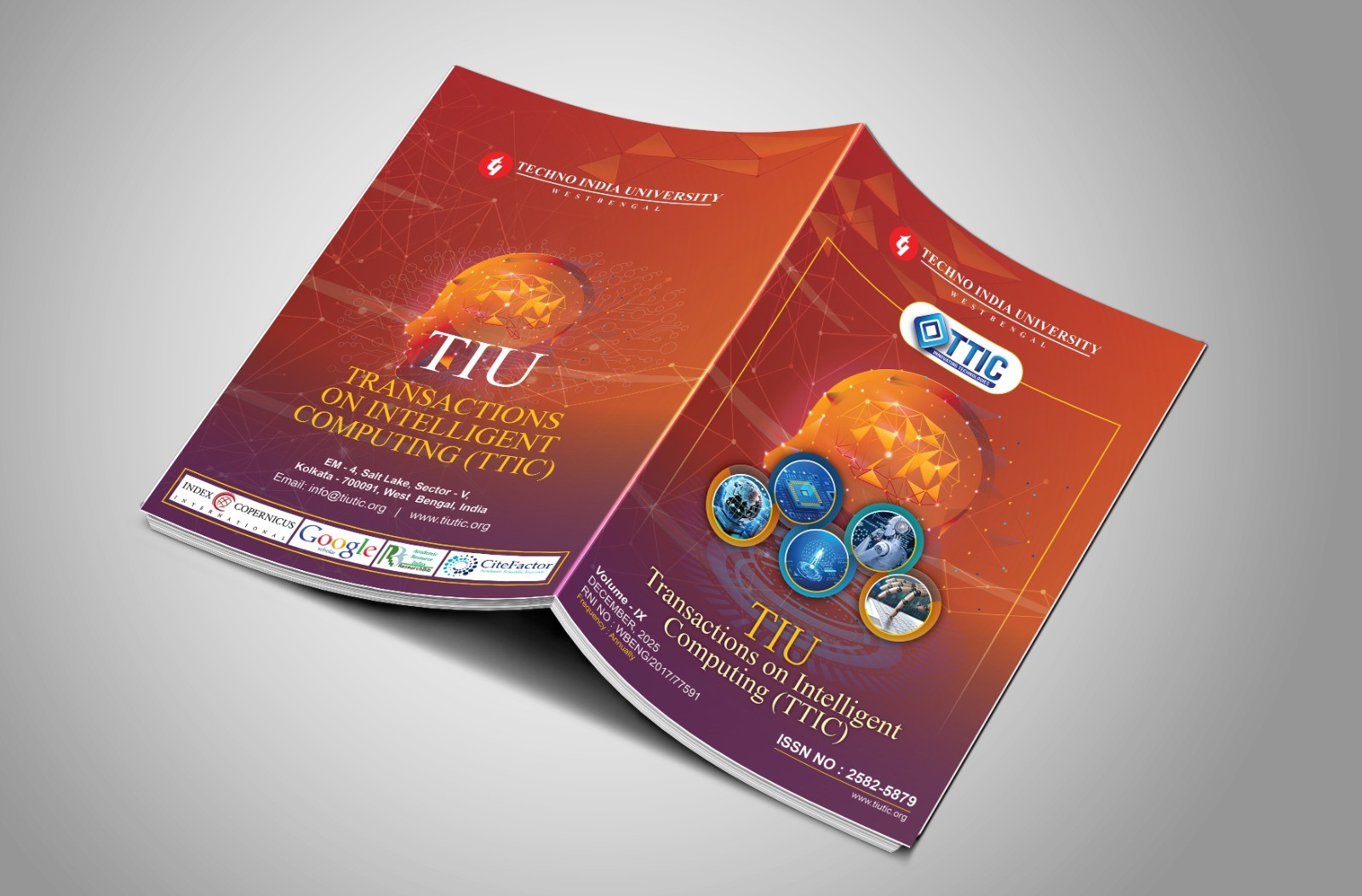
FROM THE JOURNAL
TIU Transactions on Inteligent Computing

Abstract
Main feature of the research is the proposal of a
novel Intrusion Detection System (IDS) for autonomous cars
based on the newest machine learning techniques. The main task
for the IDS will be the detection of cyberattacks and their
classification which could include different types like DDoS,
Fuzzy, Impersonation, and ordinary "Free" traffic. The whole
process of building and testing models is based on CAN
intrusion-dataset which describes the communication among
vehicles in terms of Messaged, Byte-level signals, and Target
labels. Besides, some of the machine learning methods such as
Random Forest, Gradient Boosting, Adaboost, LSTM, and
CatBoost will be combined to perform the task of detecting and
preventing threats. Thus, the identification of unauthorized
persons trying to access vehicle networks will not only be very
secure but also very adaptive because of the complete usage of
these algorithms. Therefore, the security and reliability of the
smart vehicle systems will be enhanced. In a nutshell, the
development of a detection system has the intention that it would
not just have a capability of scaling but at the same time also be
able to guard against the ever-increasing cyber threats targeting
the smart vehicles.
Keywords: Random Forest, Gradient Boosting, Adaboost,
LSTM, CatBoost classifiers.